Desk sheet - Heat
What Heat Does to a Car Nobody Moves, and When Shade Pays for Itself
The single most asked question at this desk, and the answer is not the one people expect. One hot afternoon does almost nothing. Fifty in a row do something specific, and the specific part decides whether you should pay for a canopy.
01The shape of the problem
Tucson has a long run of very hot days, and the run matters more than the peak. A car standing outdoors here does not experience one bad afternoon; it experiences the same afternoon repeatedly, cooling overnight and heating again, for as many days as your reservation lasts.
Two things follow.
A short stay is barely affected. Three days of this is three heat cycles. Cars do that in a supermarket parking lot every week of the year.
A long stay is affected in a particular place. The damage, such as it is, concentrates in the interior and in anything made of rubber or plastic that faces upward. Not the paint, not the engine, not anything mechanical.
02Where it actually lands
| Part of the car | What a long hot run does | Whether shade helps |
|---|---|---|
| Dashboard top and upper trim | The hottest surface in the vehicle by a wide margin. Repeated cycles are what fades and hardens it | Yes, more than anywhere else |
| Steering wheel and gear selector | Uncomfortable rather than damaged, and for the first ten minutes only | Yes, noticeably |
| Rubber seals around doors and glass | Dry and stiffen slowly over many weeks | A little |
| Wiper rubber | Hardens, and the first wipe after a long stay can smear | A little |
| Tires | Pressure rises with heat; the rubber itself is fine | No, this is physics not damage |
| Paint and clear coat | Very little over weeks. This is a years problem, not a weeks one | Marginal |
| Battery | Heat shortens its life over seasons, not over one stay | Marginal |
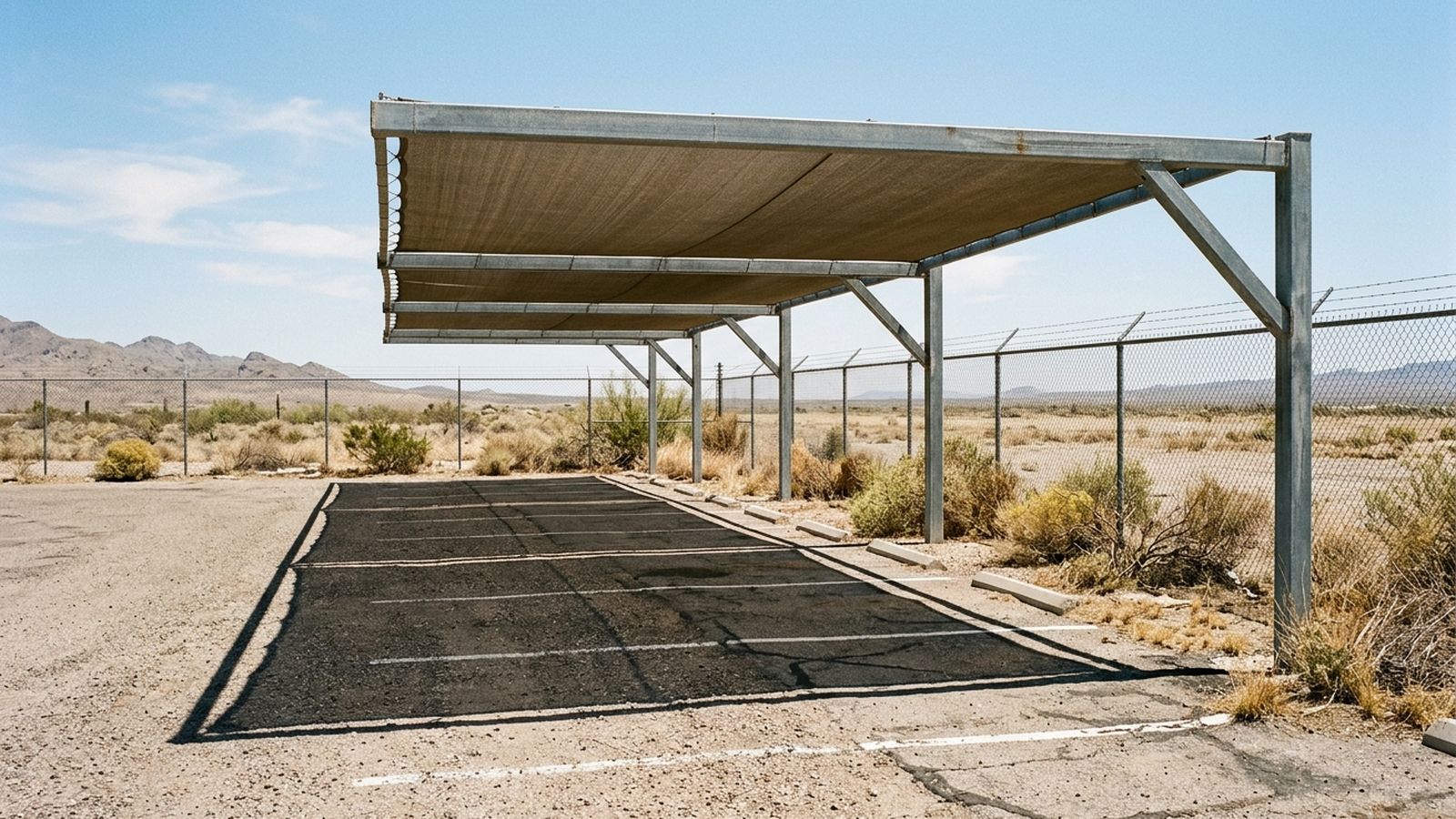
The pattern is worth reading twice, because it is the opposite of the folk wisdom. People buy shade to protect the paint. Shade earns its keep on the dashboard.
03The rule this desk uses
Simple enough to say in one line: shade is a modest addition on a short stay and a sensible one on a long stay between May and September.
- Under four days, any month: open ground is fine. Do not pay for a canopy.
- A week or more, May to September: a shaded stall is the one addition on the rates page worth asking for.
- A week or more, November to March: open ground is fine again. The sun is low and short.
- A month or more, May to September: ask for shade, and if the lot has none, ask which lots do.
That is the whole of it, and it is why the calendar is a page rather than a paragraph.
04What we will not do about heat
Nothing is done to a vehicle that stands. No cover is fitted, no window is left cracked on your behalf, no sun shade is placed inside, and nothing is started or moved. This is one of the five refusals, and heat is the reason it comes up most often.
If you want a folding shade inside the glass, put it there yourself before you hand nothing to anybody, because you keep your keys.
05Two things people ask that are not true
"A hot car needs the windows cracked." Not while it is parked in a lot for a week. A cracked window in the monsoon months is an invitation for dust and water, and in any month it is an invitation for wildlife. The sheet on the engine bay explains why that matters more here than it would elsewhere.
"Shade means the car will be cool when I get back." It will not. It will be less hot, and it will still want ten minutes with the doors open. Shade is protecting the dashboard over weeks, not delivering you a cool cabin on the day.
06What this means for the reservation you should make
- Decide the length of stay first. Under four days, ignore this whole page.
- Look at the month. May to September changes the answer; November to March does not.
- Then ask for the grade of stall, which is a preference on the reservation form rather than a product.